
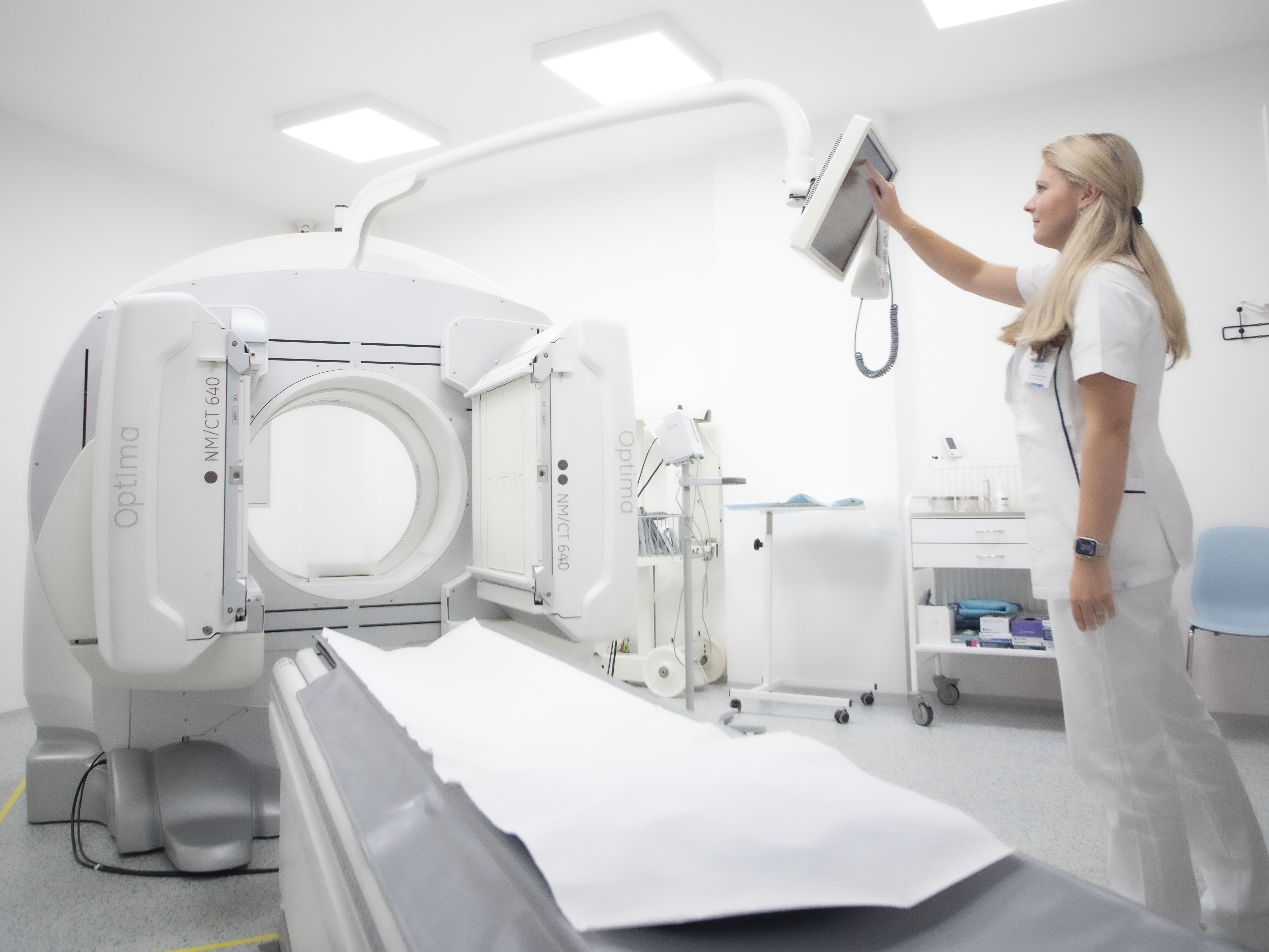
Myocardial scintigraphy – amyloidosis
A gentle examination that reveals protein deposits in the heart muscle
What is amyloidosis?
Amyloidosis is a disease in which abnormal proteins (amyloid) are deposited in the body. If they are deposited in the heart, the heart muscle can stiffen and have difficulty pumping blood.
What is myocardial scintigraphy?
Myocardial scintigraphy is a special test that shows whether amyloid is deposited in your heart. It uses a radioactive phosphonate-based substance that binds to amyloid deposits.
This makes it possible to determine whether you have transthyretin amyloidosis (ATTR) without the need for a biopsy.
Why is the test performed?
- When cardiac amyloidosis is suspected.
- In patients with thickening of the heart wall of unknown origin.
- In cases of long-term shortness of breath and heart failure.
- To assess the extent of the condition and monitor treatment.
How is the examination performed?
- A small amount of radioactive substance is injected into a vein.
- After 1–3 hours, imaging is performed using a special camera (SPECT/CT).
- The examination takes about 2–3 hours, including waiting time, with the imaging itself taking about 30 minutes.
The examination is painless and comfortable.
How should I prepare?
- No special diet or discontinuation of medication is necessary.
- Wear comfortable clothing for the examination.
- If you are pregnant or breastfeeding, please inform your doctor.
Is the examination safe?
Yes. The radiation exposure is low and the method is commonly used in specialised facilities.
Why choose us?
- The ability to detect amyloidosis without the need for a biopsy
- Modern SPECT/CT equipment
- Experienced team of cardiologists and nuclear medicine specialists
- We cooperate with all health insurance companies
