
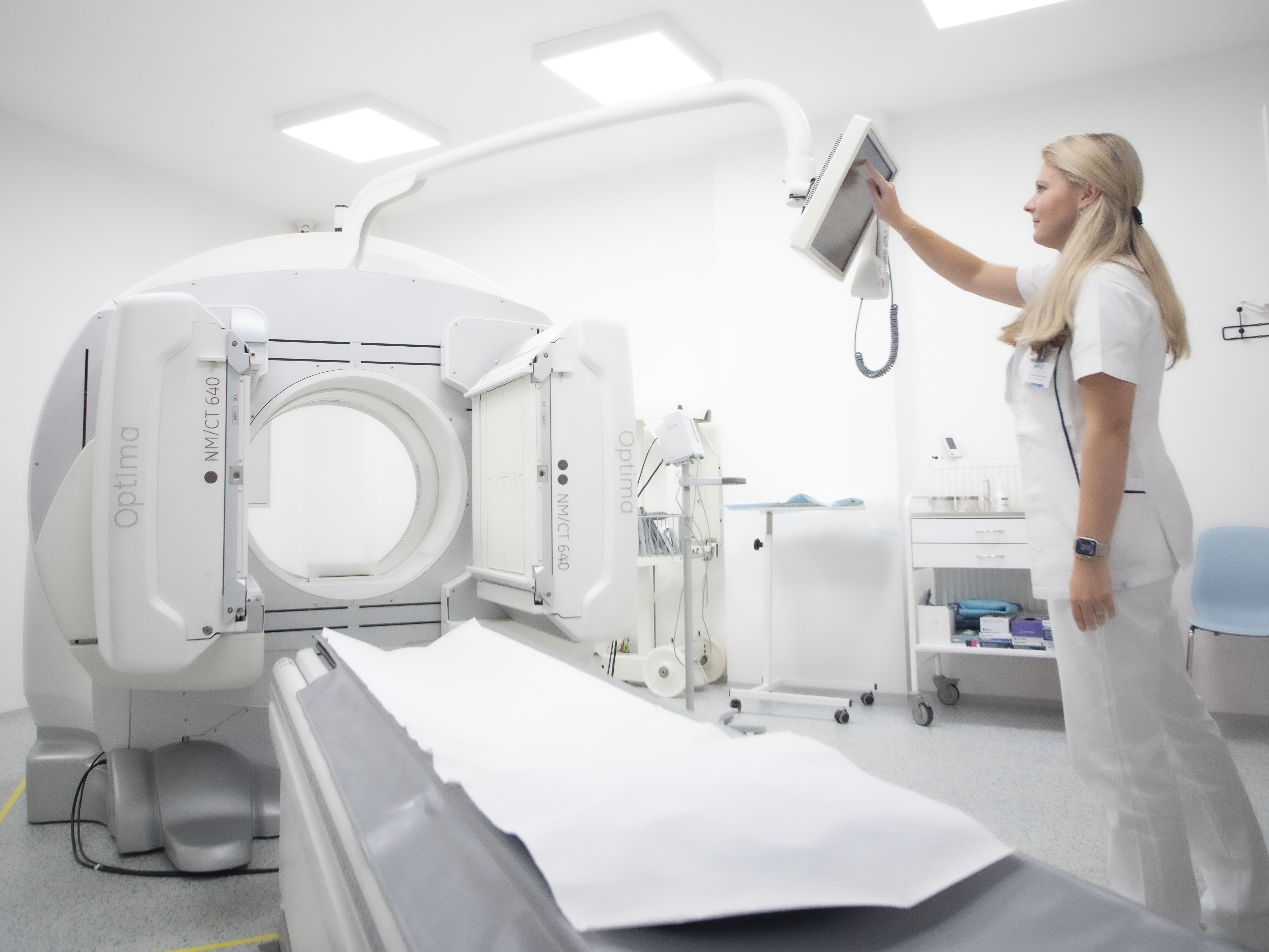
Perfusion scintigraphy of the myocardium under stress
A gentle examination that shows how your heart works during exercise
What is myocardial perfusion scintigraphy?
It is a modern heart examination that shows how well the heart muscle is supplied with blood during exercise and at rest. This allows doctors to determine whether the coronary arteries are narrowed and whether the heart is suffering from a lack of oxygen.
Why is the examination performed?
- For chest pain or shortness of breath when ischaemic heart disease is suspected.
- To assess whether narrowing of the heart arteries is significant for heart function.
- When deciding on treatment – whether a stent, bypass or medication is needed.
- To evaluate the effectiveness of treatment after a procedure or surgery.
How is the examination performed?
- The patient is exercised on an ergometer (bicycle), or a drug that mimics exercise is used.
- When the target heart rate is reached, a small amount of radioactive substance is administered.
- A special camera (SPECT/CT) records the distribution of blood in the heart muscle.
- The examination is also repeated at rest for comparison.
The entire examination takes approximately 3–4 hours and is painless.
How to prepare
- Do not eat or drink anything (except for a small amount of water) for 4–6 hours before the examination.
- Do not consume caffeine (coffee, tea, cola, chocolate) 24 hours in advance.
- Some heart medications (e.g. beta blockers) may need to be temporarily discontinued – always follow your cardiologist's instructions.
Is the examination safe?
Yes. The radiation exposure is comparable to a standard CT scan. The test is performed under the supervision of an experienced team and is safe in the long term.
Why choose us?
- Modern SPECT/CT technology for accurate diagnosis
- Experienced team of cardiologists and nuclear medicine specialists
- Individual approach to each patient
- We cooperate with all health insurance companies
