
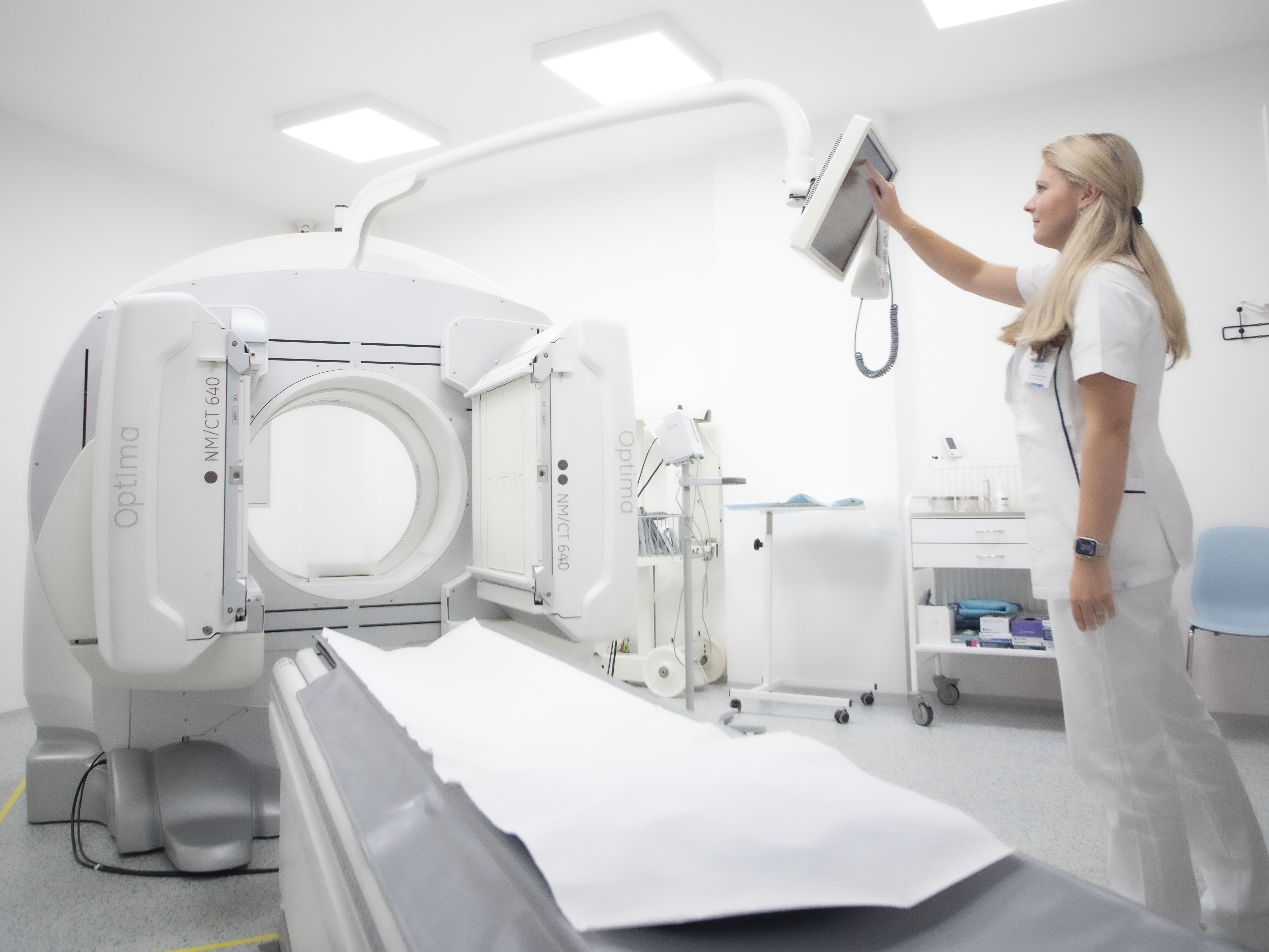
Cerebrovascular reserve (CVR) examination
A gentle examination that shows how well your brain is supplied with blood
What is cerebrovascular reserve?
The blood vessels in the brain can expand as needed to supply more blood to the brain. We call this ability cerebrovascular reserve.
If it is limited, the brain may be at risk of insufficient blood supply (ischaemia).
Why is the examination performed?
- In cases of narrowing or blockage of the carotid arteries.
- After a stroke (CMP) or TIA.
- Before planned vascular procedures (e.g. stenting, bypass).
- When investigating memory and cognitive disorders, where poor blood supply to the brain may play a role.
How is the examination performed?
- First, the brain is examined at rest – after administering a small dose of a radioactive substance.
- You will then be given the drug acetazolamide, which briefly dilates the blood vessels in the brain and simulates stress.
- After 15–20 minutes, another dose of radiopharmaceutical is administered and a second scan is performed.
- The examination takes approximately 2–3 hours, with the camera imaging itself taking about 30 minutes.
The examination is completely painless.
How to prepare
- No special diet or discontinuation of regular medication is necessary (unless otherwise specified by your doctor).
- We recommend drinking plenty of fluids before the examination.
- If you are pregnant or breastfeeding, you must inform your doctor.
Is the examination safe?
Yes. The radiation exposure is low. The medication administered may cause a brief feeling of warmth, dizziness or tingling, but these symptoms will quickly subside.
Why choose us?
- An examination that detects the risk of cerebral ischaemia in time
- Modern SPECT/CT technology
- Experienced team of neurologists and nuclear medicine specialists
- We cooperate with all health insurance companies
