
Cholescintigraphy (hepatobiliary scintigraphy)
A practical guide for referring physicians
 Principle and method
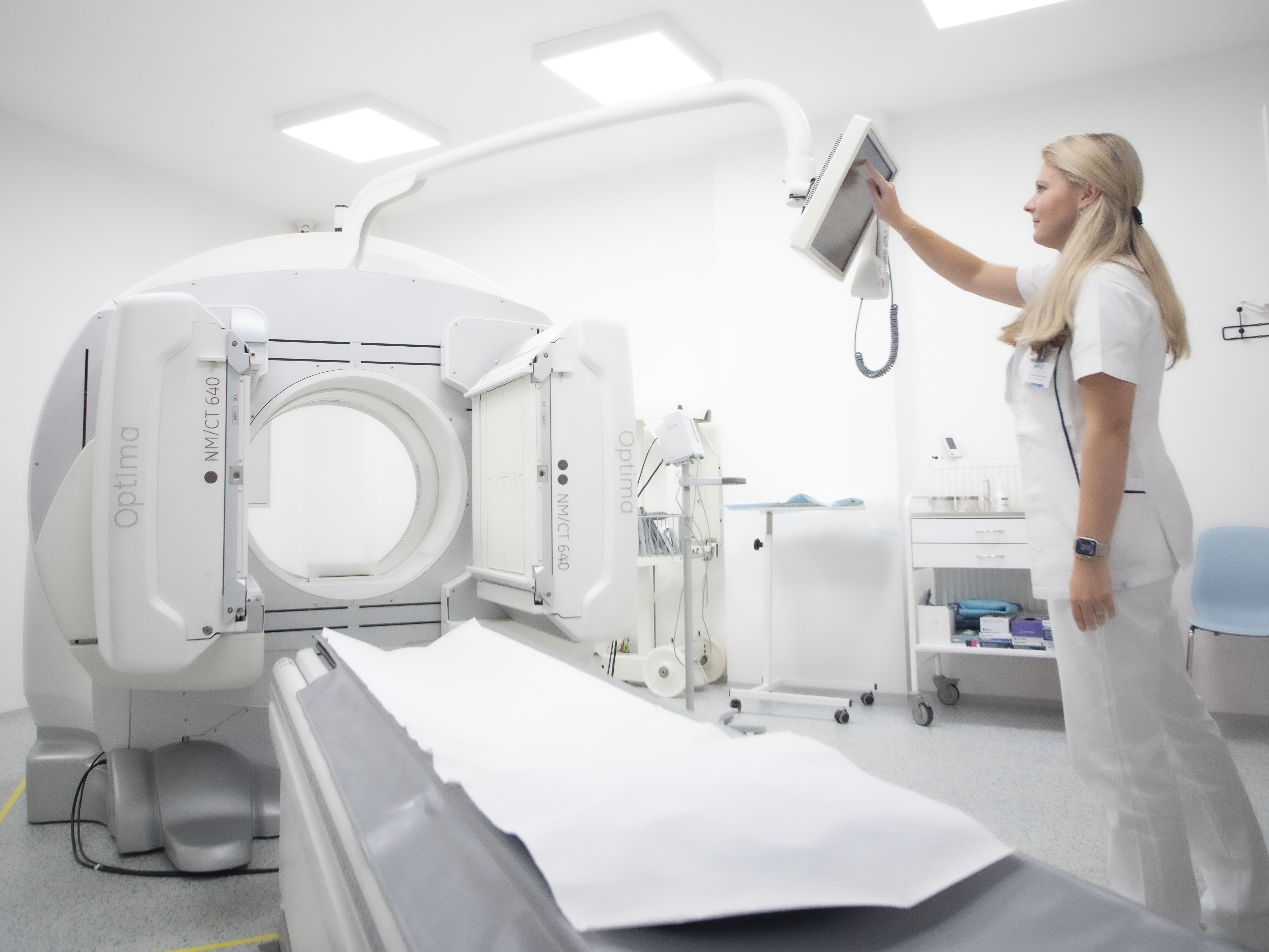
Cholescintigraphy is a functional radionuclide examination that allows for the evaluation of hepatic excretory function, bile duct patency, gallbladder motility and the detection of duodenogastric reflux.
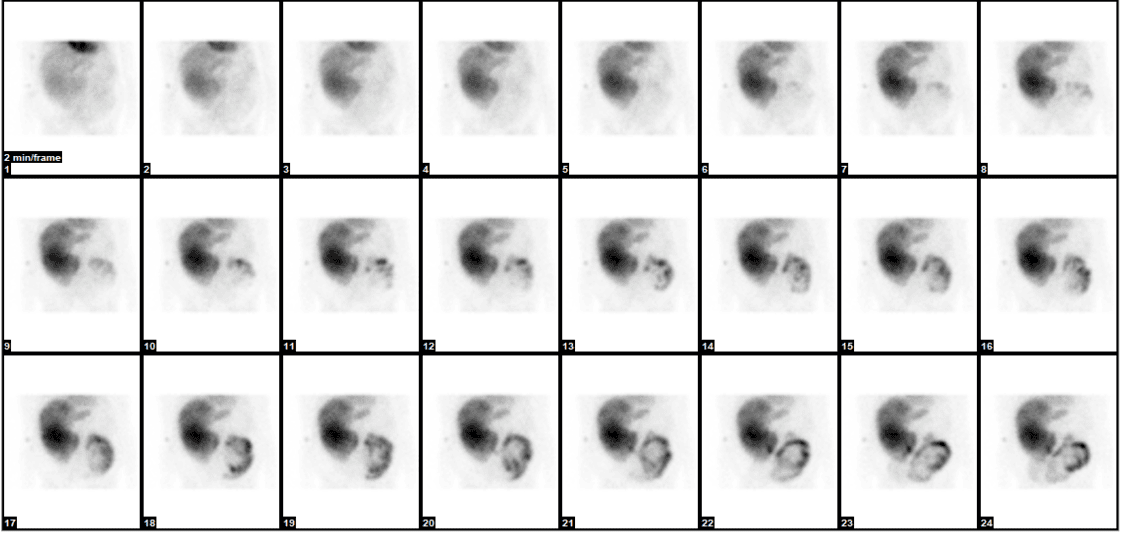
After intravenous administration of a 99mTc-labelled radiopharmaceutical (most commonly iminodiacetate derivatives – HIDA, DISIDA, Mebrofenin), the substance is taken up by hepatocytes, concentrated in bile and excreted into the bile ducts and duodenum. Dynamic imaging allows the passage of the radiopharmaceutical through the individual sections of the hepatobiliary system to be monitored in real time.
Unlike morphological methods (USG, CT, MRCP), cholescintigraphy provides physiological and functional information about bile flow and gallbladder contractility.
Main clinical indications
- Upper dyspepsia
- Chronic cholecystopathy
- Assessment of gallbladder ejection fraction (after administration of a fatty meal).
- Bile duct obstruction
- distinction between high vs. low obstruction, supplementation with ultrasound or MRCP.
- Postoperative conditions
- evidence of bile leakage from anastomosis or bile duct wall,
- assessment of the patency of biliary-digestive anastomoses.
- Assessment of liver function
- in diffuse liver diseases (hepatitis, cirrhosis, toxic damage).
Interpretation
- Normal findings: visualisation of the liver within a few minutes, intrahepatic and extrahepatic bile ducts within 15–30 minutes, gallbladder within 60 minutes, duodenum within 60 minutes.
- Abnormal findings:
- cholecystitis – absence of gallbladder filling,
- obstruction – delayed or absent visualisation of the bile ducts or duodenum,
- biliary leak – extravasation of radiopharmaceutical outside the bile ducts,
- reduced gallbladder ejection fraction (<35%) during stimulation.
Practical information for the referring physician
- Patient preparation:
- fasting for 4–6 hours before the examination,
- prolonged fasting (>24 hours) is not recommended as it may lead to false positive findings (failure to empty the gallbladder),
- discontinuation of opioids and other drugs affecting gallbladder motility (if clinically possible).
- Examination duration: 60–120 minutes, late images may be added depending on the indication.
- Radiopharmaceuticals: 99mTc-mebrofenine (most commonly) or other iminodiacetate derivatives.
- Stimulation: fatty meal to assess gallbladder ejection fraction.
- Radiation exposure: low, approx. 3–5 mSv.
- Contraindications: pregnancy (relative), severe allergic reactions to the substances administered.
Summary for practice
Cholescintigraphy is:
- a method for quantitative assessment of gallbladder function and bile duct patency,
- valuable in postoperative conditions for detecting leaks and evaluating anastomoses,
- safe, with low radiation doses and wide availability.
It is an ideal complement to morphological methods, providing unique functional information that is of fundamental importance for both surgical and internal medicine disciplines.
