
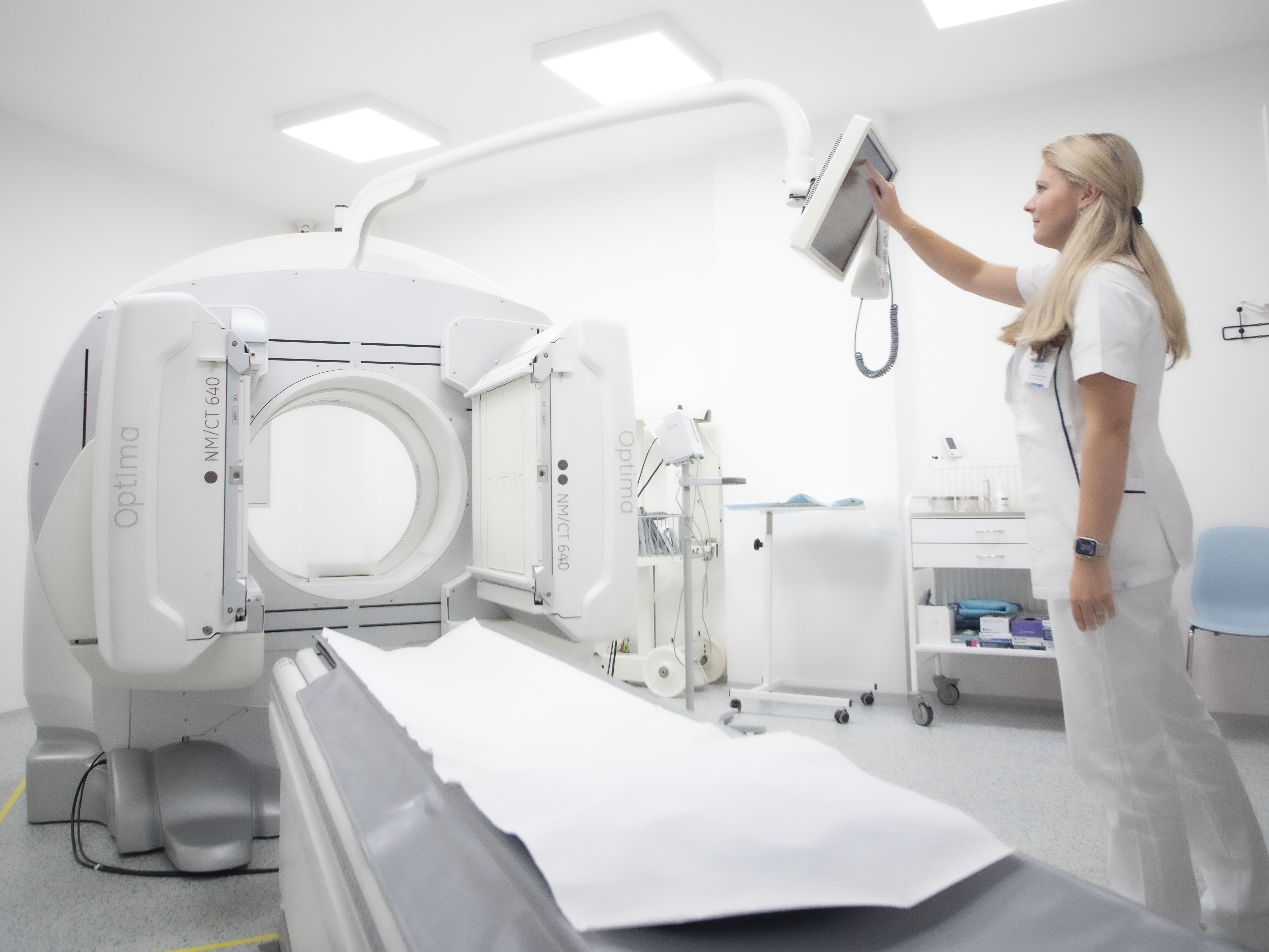
Gastric evacuation scintigraphy
A practical guide for referring physicians
 Principle and method
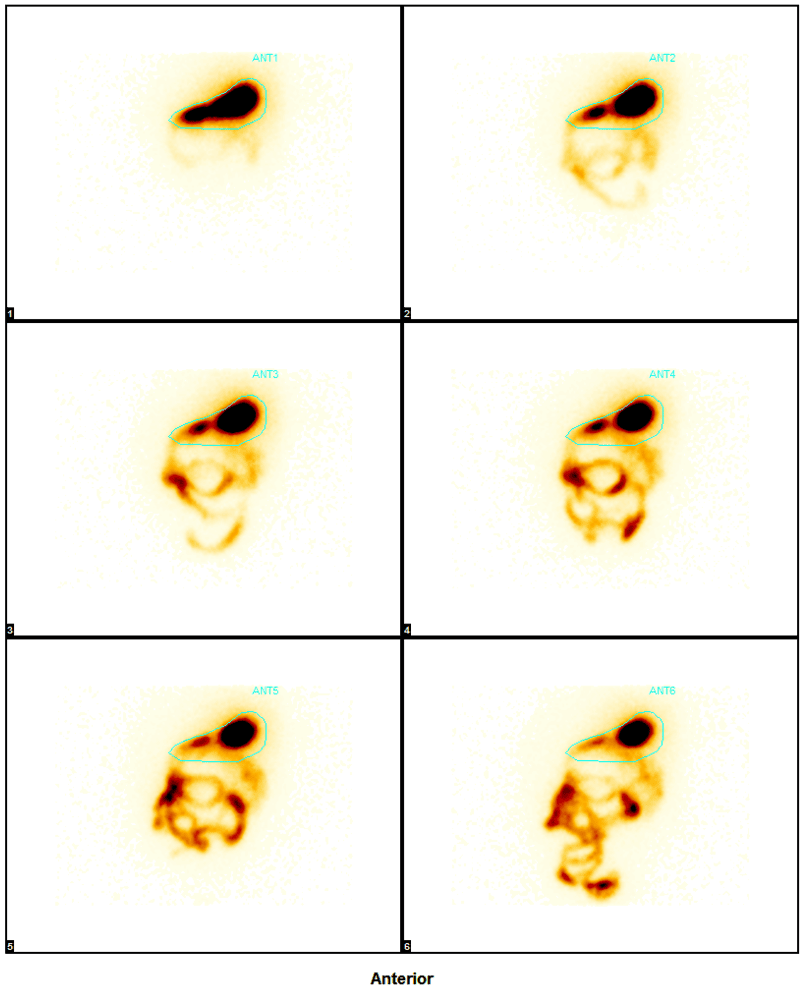
Gastric emptying scintigraphy (gastric emptying study) is a standard functional radionuclide examination for assessing gastric motility and emptying rate. It involves the oral administration of a test meal (standardised solid or liquid food) mixed with a 99mTc-labelled radiopharmaceutical (most commonly 99mTc-DTPA).
Dynamic scintigraphy is used to record the decrease in radioactivity in the stomach over time, which allows for an objective calculation of the evacuation half-life (T½) and comparison with normal values. The examination provides physiological information about the function of the stomach under real digestive conditions.
Main clinical indications
- Gastroparesis
- diabetic (the most common cause of gastric evacuation disorders),
- post-infectious, post-surgical, idiopathic.
- Upper dyspeptic symptoms of unclear aetiology
- feeling of fullness, nausea, vomiting, abdominal pain, flatulence.
- Assessment of gastric motility in neurological diseases
- Parkinson's disease, systemic sclerosis, amyloidosis.
- Postoperative conditions
- after gastric resection, vagotomy, bariatric surgery (especially for the assessment of dumping syndrome).
- Research and experimental indications
- evaluation of the effect of drugs affecting motility (prokinetics, opioid analgesics, anticholinergics).
Interpretation
- Normal findings: with standard solid food (e.g. egg omelette with 99mTc), physiological emptying of 50% of the content occurs within 90 ± 15 minutes, with complete evacuation within 3–4 hours.
- Pathological delay: retention >60% after 2 hours or >10% after 4 hours.
- Accelerated evacuation: typically in dumping syndrome or after surgery.
The advantage over other methods (X-ray passage, breath tests, ultrasound, MRI) is its quantitative nature and more physiological conditions.
Practical information for the referring physician
- Patient preparation:
- fasting for at least 6 hours,
- discontinuation of medications affecting motility (if clinically possible) at least 48 hours before the examination.
- Test meal:
- standardised solid food (I would write what we actually give) or liquid phase (99mTc-DTPA in water).
- Examination duration:
- dynamic imaging usually 60–120 minutes, sometimes up to 4 hours depending on the protocol.
- Radiation exposure:
- low, <1 mSv.
- Contraindications:
- pregnancy, inability to cooperate (e.g. vomiting, inability to eat the test meal).
Summary for practice
Gastric evacuation scintigraphy is:
- the gold standard for assessing gastric motility,
- key in the diagnosis of gastroparesis (especially diabetic),
- also suitable for assessing dumping syndrome and motility disorders after surgery,
- a quantitative method with low radiation exposure and a good cost/benefit ratio.
Correct indication and a standardised protocol ensure high informative value and an irreplaceable place for this method in clinical practice.
