
Scintigraphy of gastro-oesophageal reflux (GER)
A practical guide for referring physicians
Principle and method
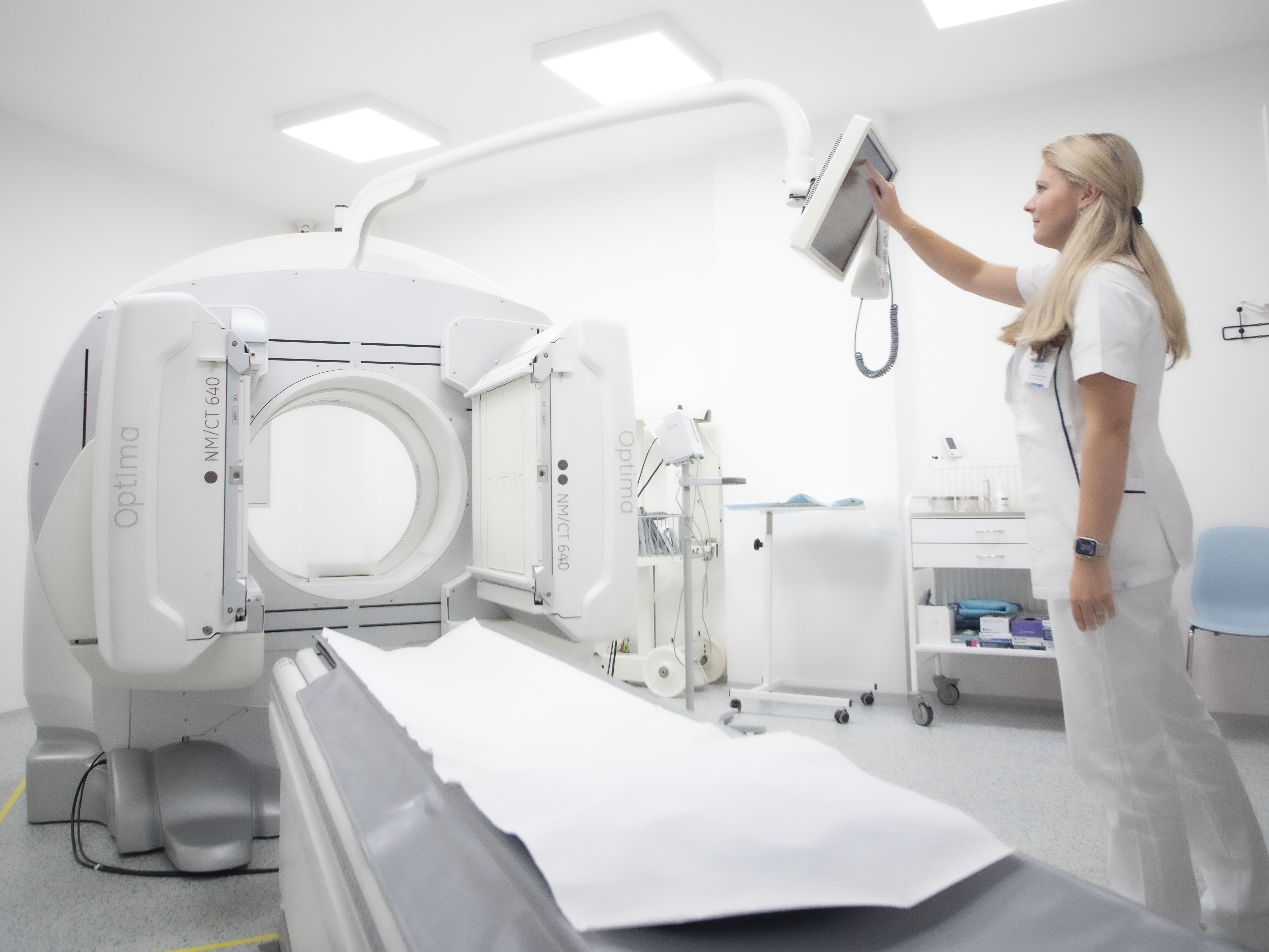
GER scintigraphy is a non-invasive functional method used to assess the return of gastric contents into the oesophagus.
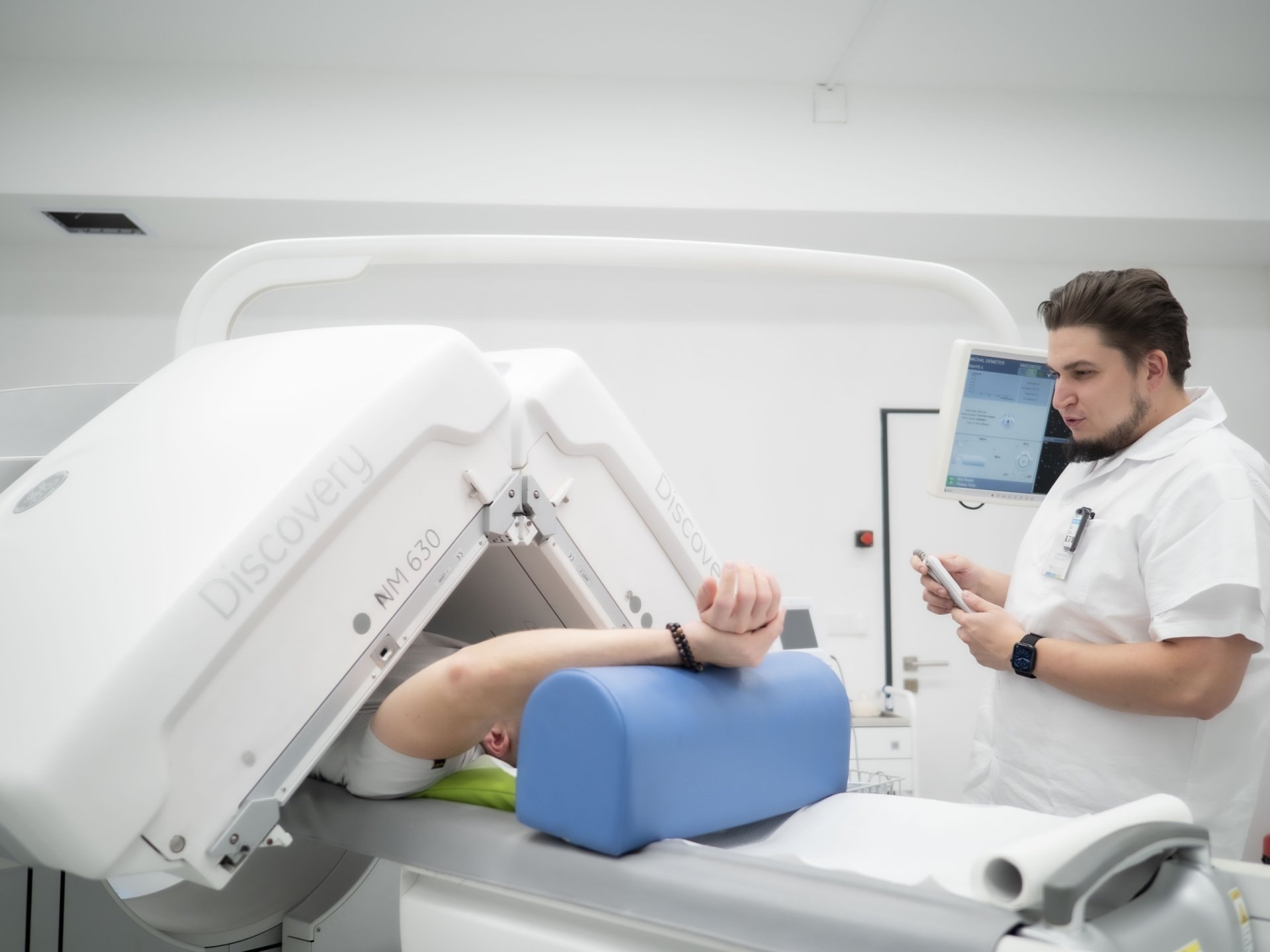
The patient orally ingests a liquid (usually water or juice) labelled with a small dose of 99mTc-DTPA. Dynamic scintigraphy of the chest and upper abdomen is used to monitor the occurrence of radioactivity in the oesophagus during rest or during provocative manoeuvres (e.g. increased intra-abdominal pressure).
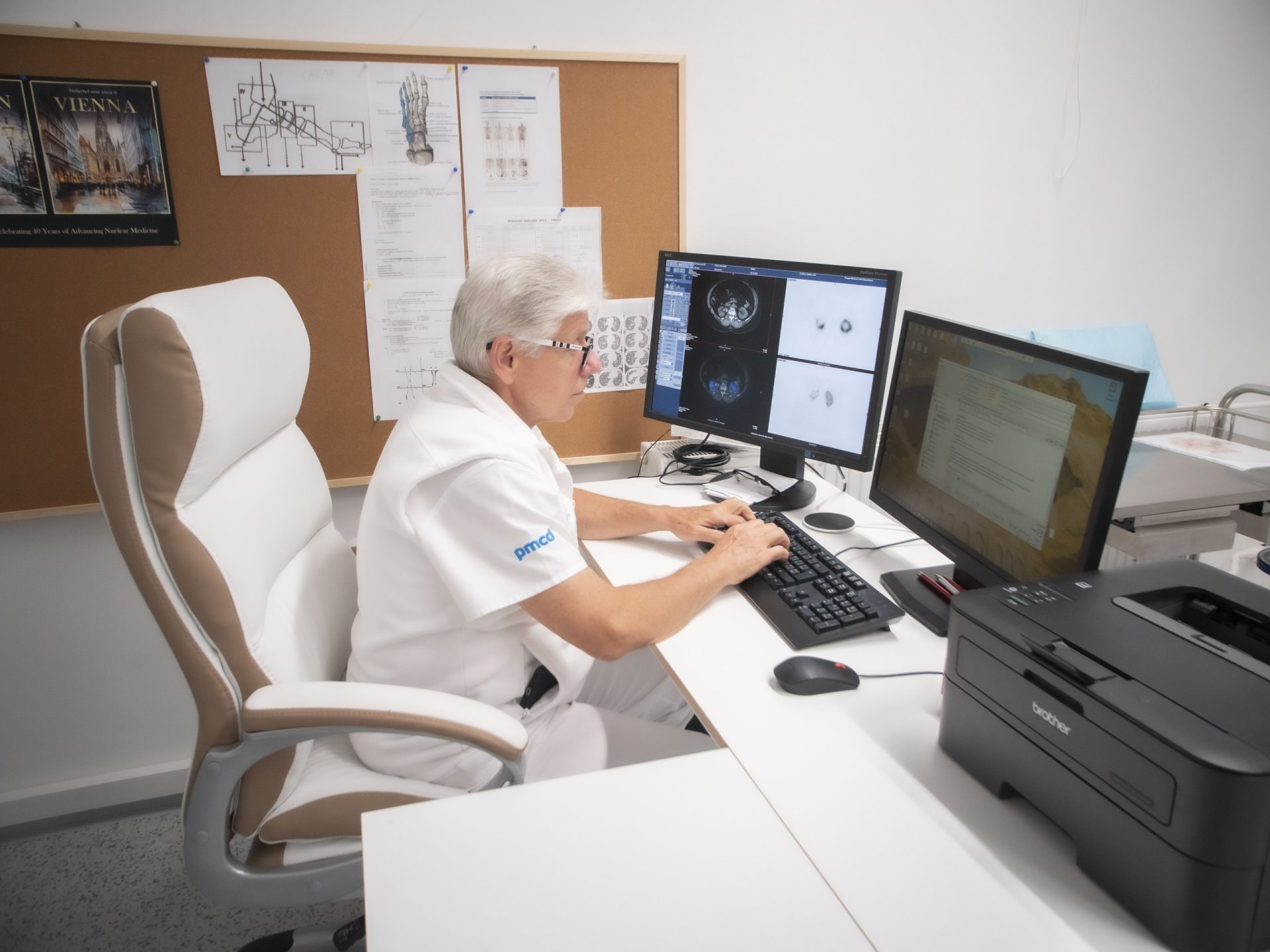
The examination not only provides qualitative evidence of reflux, but also quantification – calculation of the reflux index (ratio of activity in the oesophagus to activity in the stomach).
Main clinical indications
- Differential diagnosis of upper dyspeptic symptoms
- pyrosis, regurgitation, chronic cough, hoarseness, chest pain.
- Confirmation of GER in cases of unclear endoscopy or pH-metry findings.
- Monitoring the effectiveness of GER treatment – pharmacological or surgical (fundoplication).
- Suspected aspiration syndrome – in patients with recurrent respiratory infections.
Interpretation
- Positive findings: clear evidence of radioactivity in the oesophagus during the examination, with the possibility of assessing the frequency and extent of reflux episodes.
- Reflux index: pathological values are usually above 4% (but this depends on the facility's protocol).
Nevertheless, the method is very valuable due to its gentleness and the possibility of quantifying reflux.
Practical information for the referring physician
- Patient preparation: fasting for 4–6 hours; no need to discontinue regular medication.
- Duration of examination: usually 30–45 minutes, with the possibility of extended monitoring.
- Radiation exposure: very low (approx. 0.5–1 mSv).
- Contraindications: practically none; relative contraindications in pregnant women.
Summary for practice
GER scintigraphy is:
- a non-invasive, gentle and highly sensitive method for detecting reflux,
- particularly suitable for children and patients with unclear symptoms,
- valuable for quantitative assessment of the effect of therapy,
- ideal as a supplement to endoscopy and pH-metry.
Correct indication allows for more precise targeting of treatment and contributes to the optimisation of care for patients with reflux problems.
