
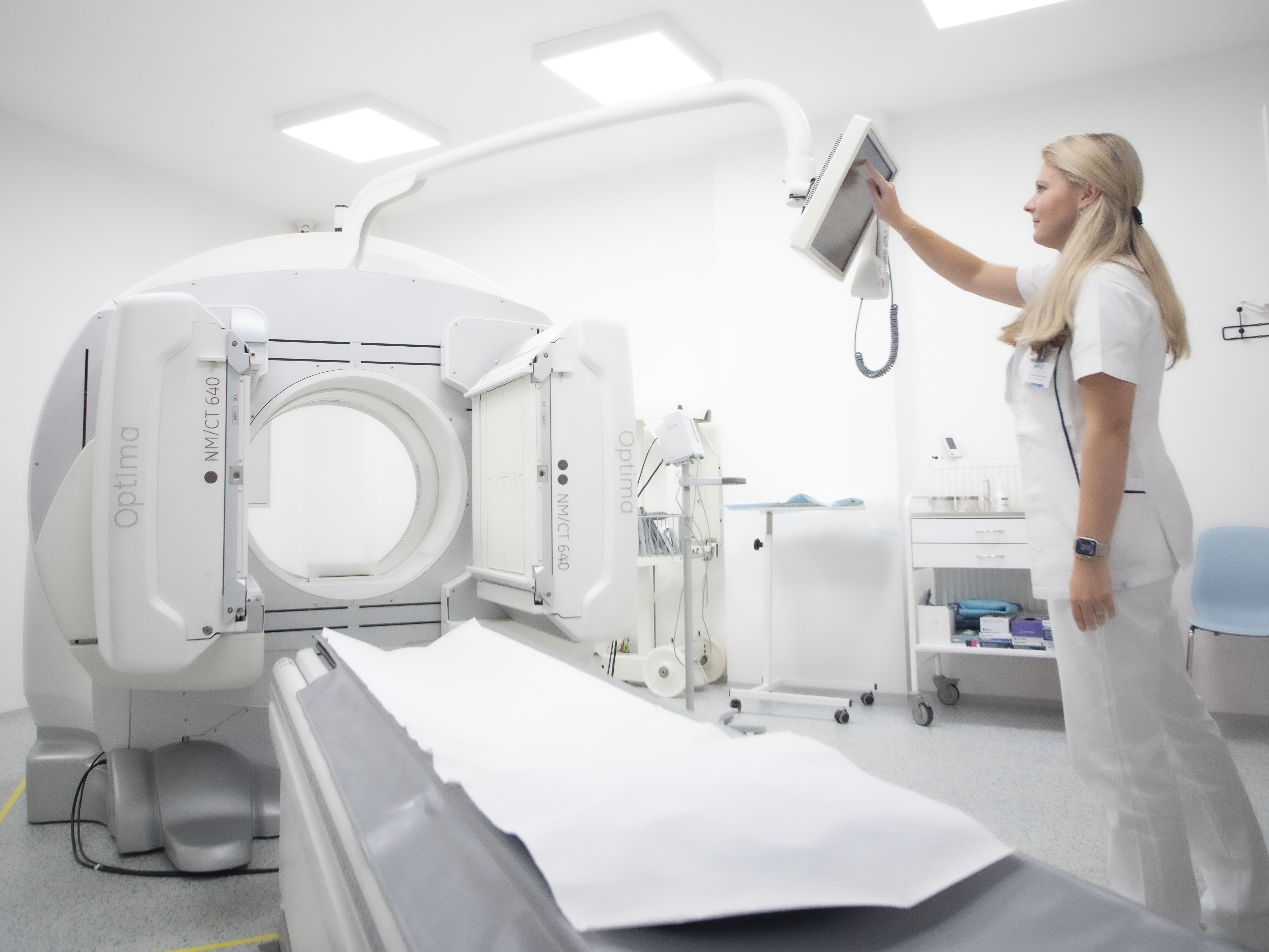
Scintigraphy of gastrointestinal bleeding
A practical guide for referring physicians
Principle and method
Radionuclide scintigraphy of gastrointestinal bleeding is a highly sensitive functional method for detecting active or intermittent bleeding throughout the entire gastrointestinal tract.
Scintigraphy using labelled erythrocytes
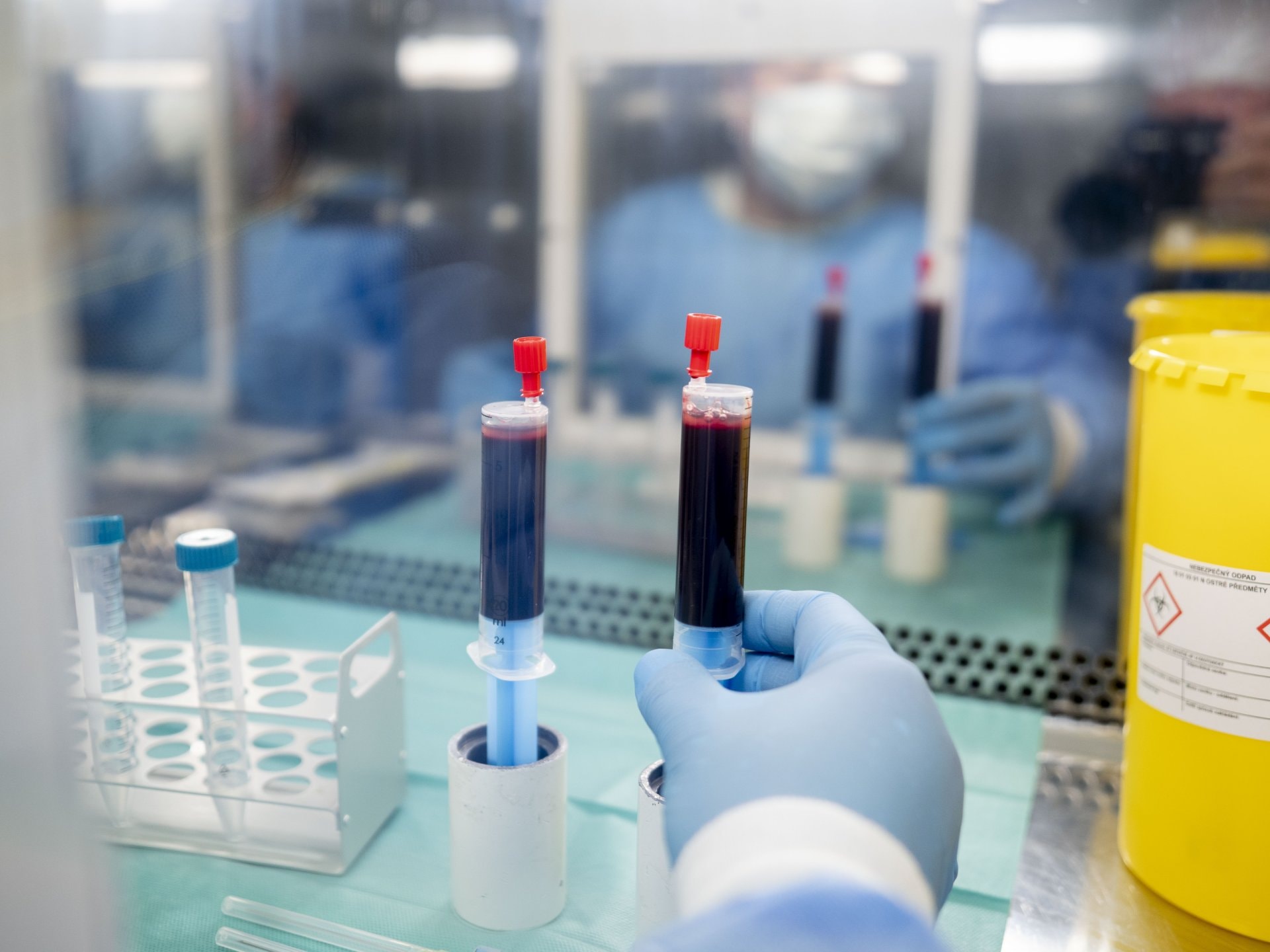
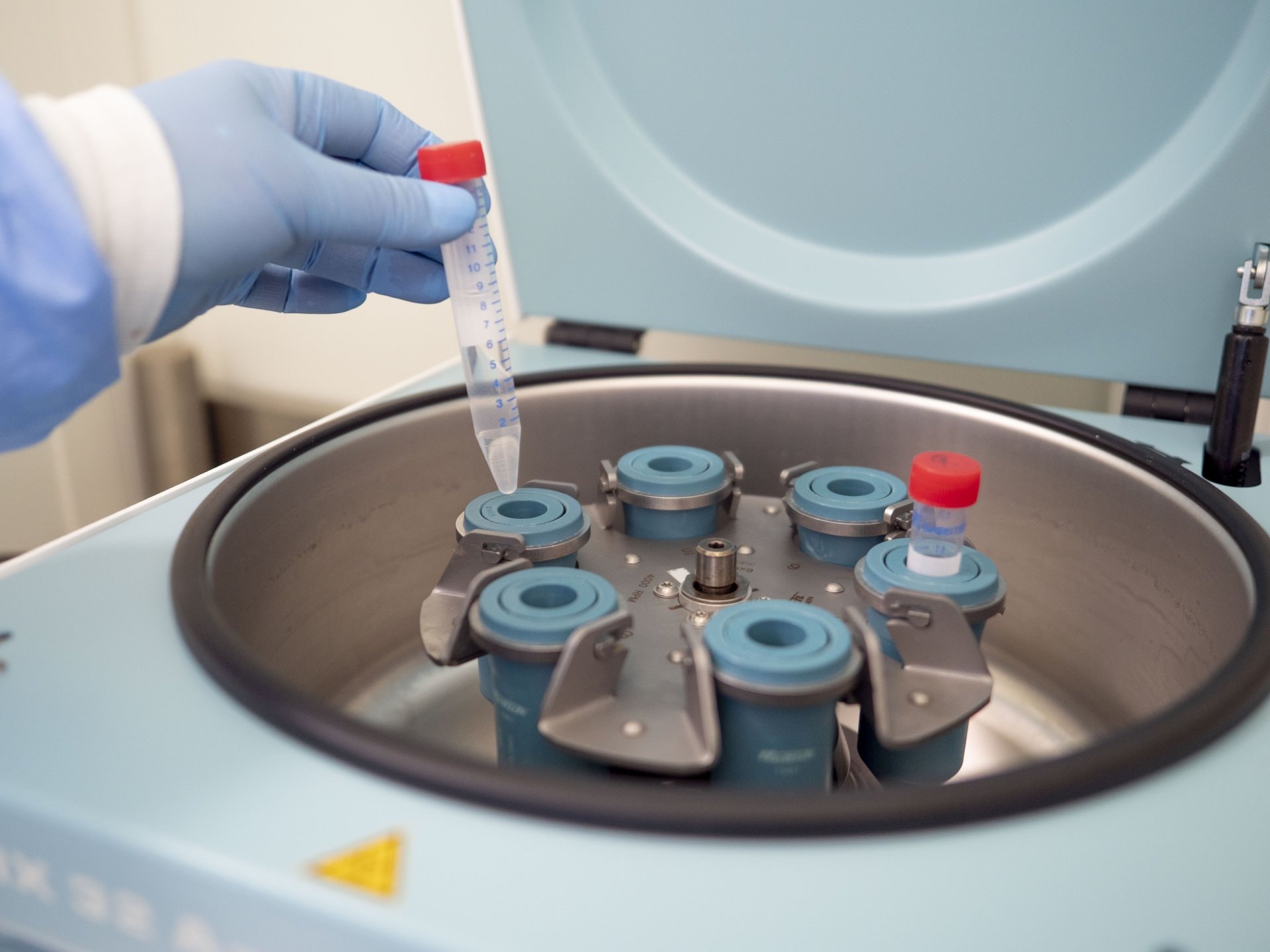
- the patient's autologous erythrocytes are labelled with 99mTc
- allows long-term monitoring for up to 24 hours, high sensitivity even with low bleeding (0.05–0.1 ml/min).
The method consists of dynamic and subsequently static imaging, including SPECT/CT, with the aim of detecting extravasation of the radiopharmaceutical into the GIT lumen, assessing its location and the dynamics of its spread.
Main clinical indications
- Acute gastrointestinal bleeding of unknown aetiology – especially in cases of negative endoscopy or in situations where endoscopy is not feasible.
- Intermittent and occult bleeding – detection of the source in chronic anaemia and other negative examinations.
- Subacute bleeding after surgery or in the area of anastomoses.
- Differential diagnosis of bleeding in diverticulosis, angiodysplasia, ulceration or tumour lesions.
Interpretation
- Positive finding: clear extravasation of radiopharmaceutical outside the vascular bed, whose movement follows GIT peristalsis (unlike fixed vascular accumulation).
- Localisation: determined by the site of first occurrence of activity; subsequent propagation proximally or distally corresponds to the peristaltic movement of the contents.
Scintigraphy often precedes selective angiography, which can then be performed in a targeted manner.
Practical information for the referring physician
- Patient preparation: fasting
- Duration of examination:
- dynamic imaging 60–90 minutes,
- labelled erythrocytes can be monitored repeatedly within 24 hours.
- Radiation exposure: approx. 3–5 mSv
- Contraindications: none absolute; relative in pregnant women.
Summary for practice
Scintigraphy of gastrointestinal bleeding is:
- the most sensitive method for detecting active and intermittent bleeding,
- capable of detecting bleeding with a flow rate as low as 0.05 ml/min,
- important for localising the source and planning subsequent endoscopic or angiographic intervention,
- safe, with low radiation exposure and high clinical benefit in both emergency and planned diagnostics.
Correct indication in the context of the clinical picture and correlation with endoscopy and angiography make this method a valuable tool in the comprehensive management of patients with GIT bleeding.
