
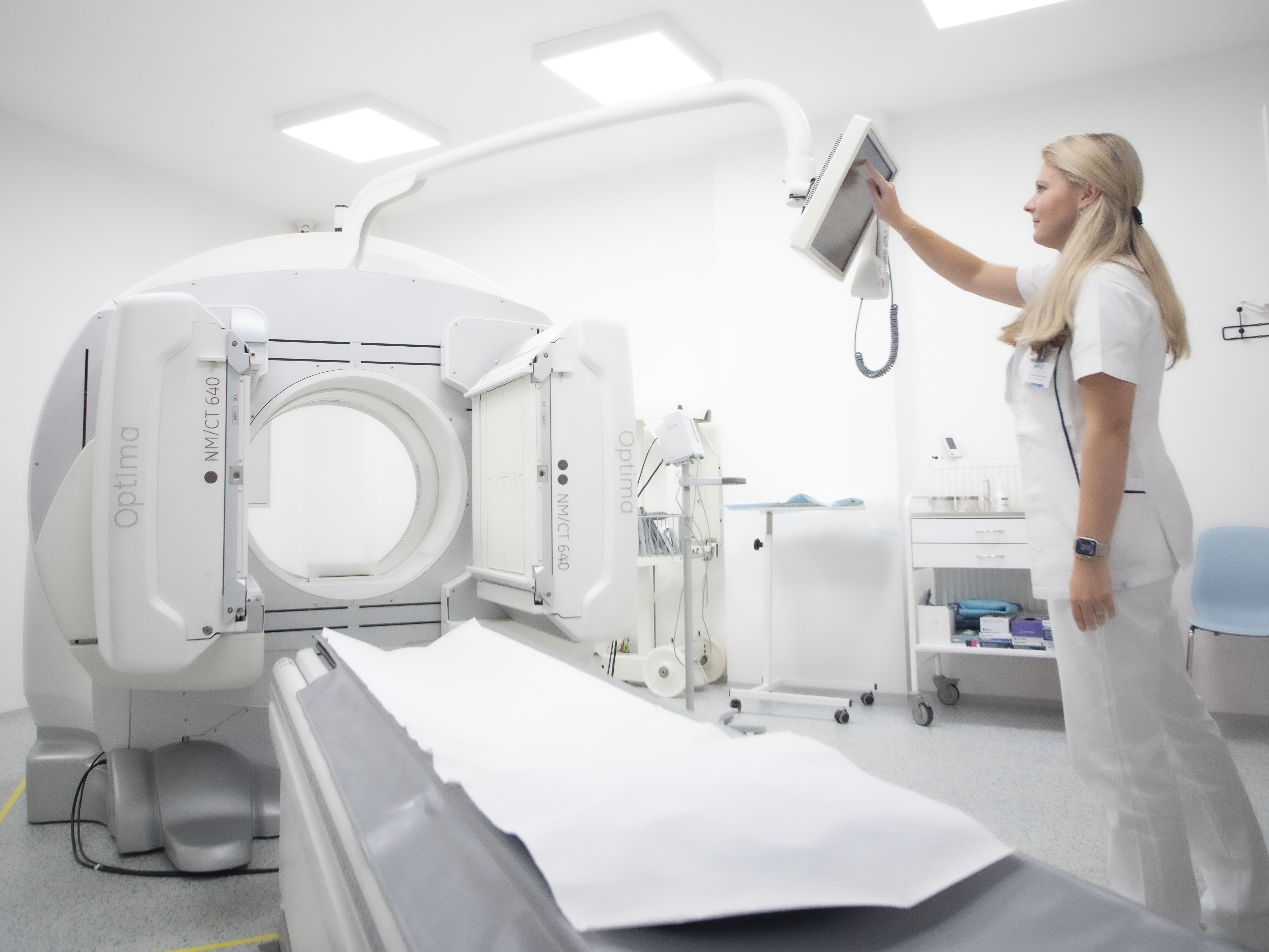
Tumour scintigraphy – 111In-pentetreotide (Octreoscan)
A practical guide for referring physicians
Principle and method
Scintigraphy with 111In-pentetreotide is a specific radionuclide examination aimed at detecting tumours expressing somatostatin receptors (SSTR). The radiopharmaceutical, a somatostatin analogue labelled with 111In, binds to subtype 2 and 5 receptors, which are abundantly expressed in most neuroendocrine tumours (NETs).
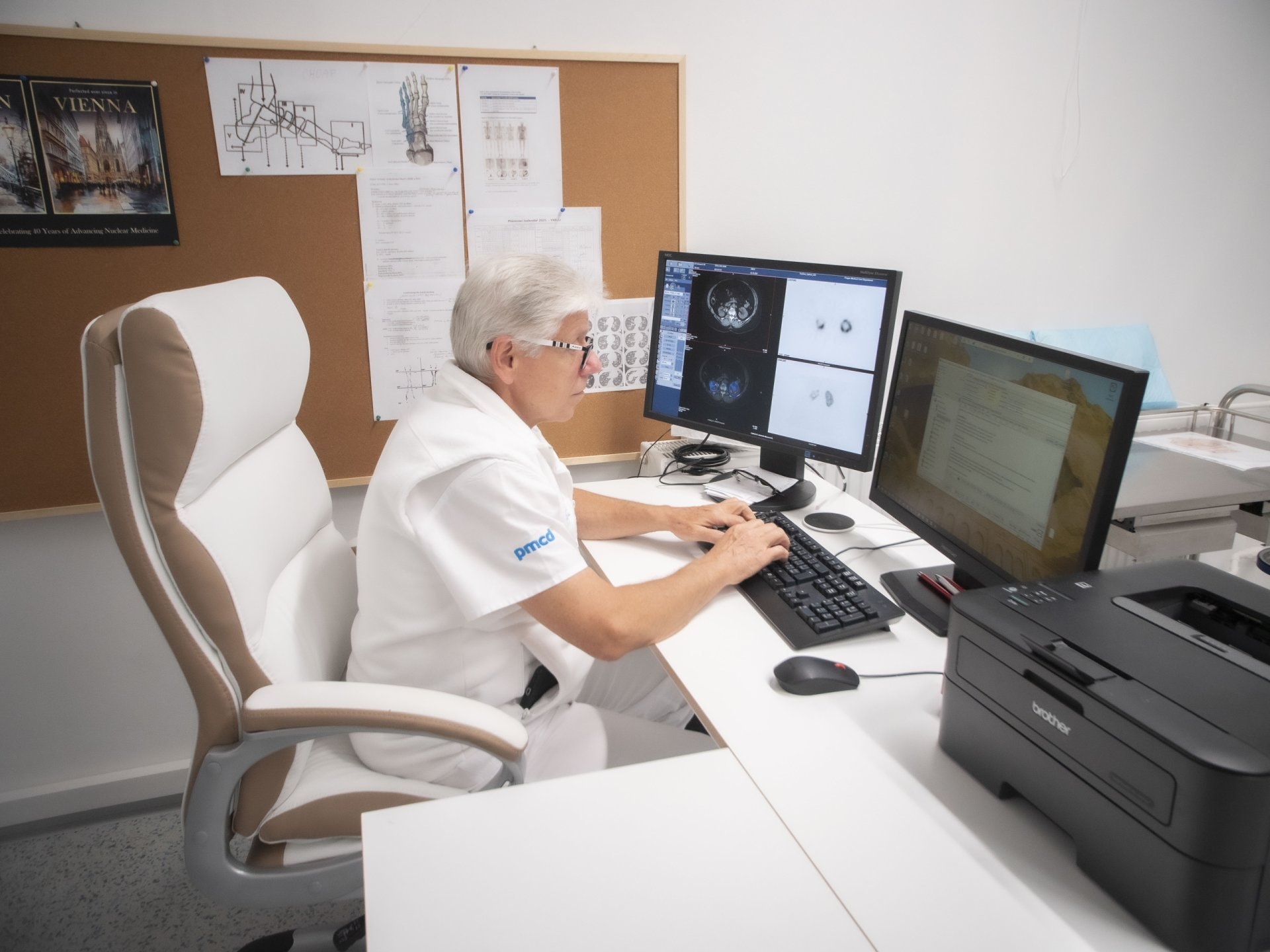
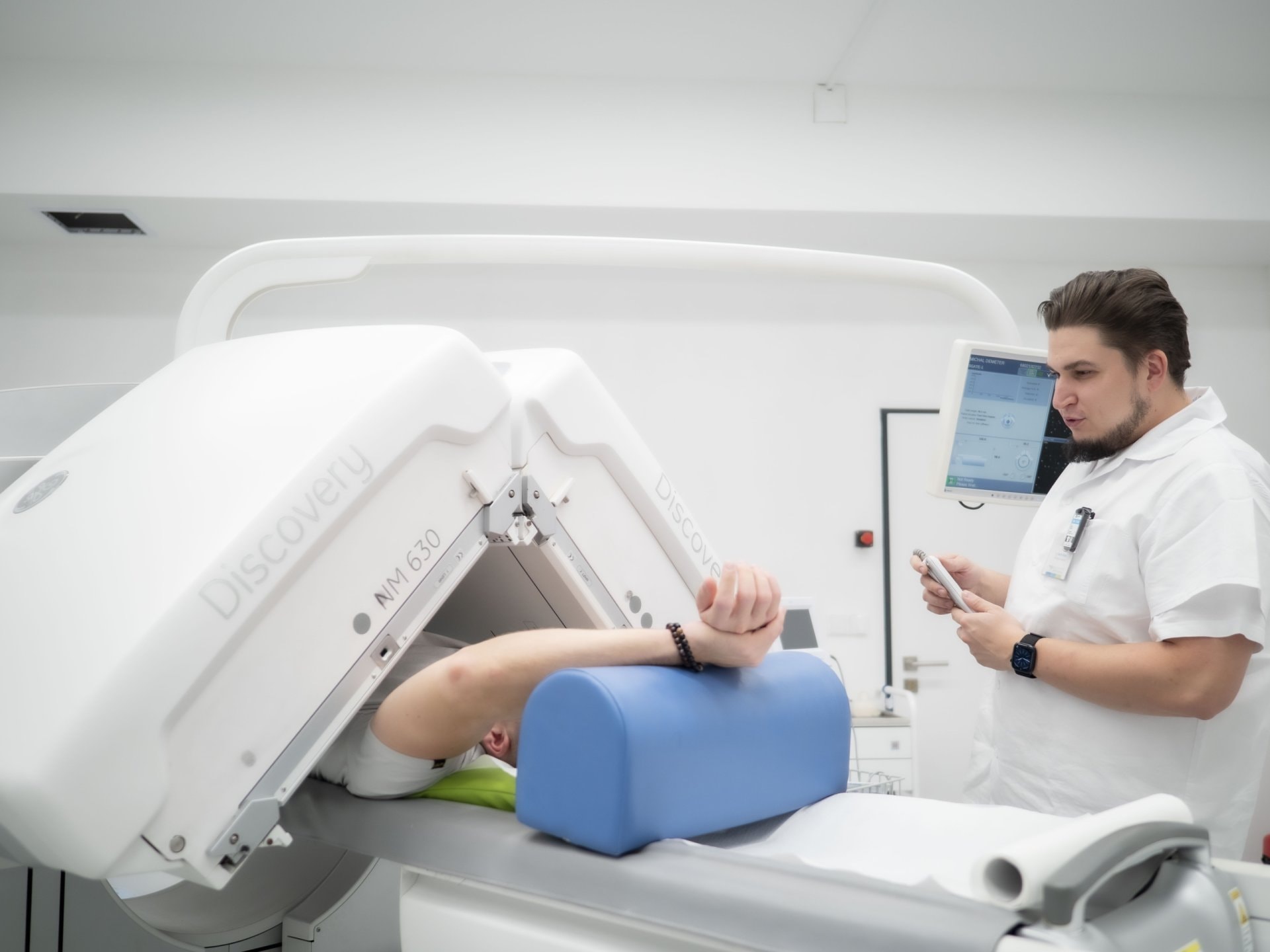
Imaging is performed using whole-body planar scintigraphy and targeted SPECT/CT, which increases localisation accuracy and allows even smaller lesions to be assessed.
Main clinical indications
- Neuroendocrine tumours (NET):
- carcinoid, gastrinoma, insulinoma, glucagonoma, VIPoma
- pancreatic and gastrointestinal NET
- Pituitary tumours with somatostatin receptor expression
- Paragangliomas, pheochromocytomas – complementary to MIBG
- Assessment of suitability for somatostatin analogue therapy or radionuclide therapy (PRRT)
Interpretation
- Positive finding: pathological foci of increased accumulation in areas with high SSTR expression
- This method is still valuable where PET scanning is not available and for assessing the extent of the disease.
Practical information for the referring physician
- Patient preparation: no need to discontinue regular medication; for patients treated with somatostatin analogues, discontinuation before the examination is recommended (short-acting – min. 24 hours, depot – 4–6 weeks)
- Examination duration: imaging usually takes place 4 and 24 hours after administration of the radiopharmaceutical (sometimes 48 hours), and lasts approximately 1 hour
- Radiation exposure: 10–12 mSv
- Contraindications: pregnancy, breastfeeding (relative)
Summary for practice:
Scintigraphy with 111In-pentetreotide (Octreoscan) is:
- the standard method for detecting and staging neuroendocrine tumours,
- useful for assessing the extent of the disease and monitoring treatment,
- key for indicating PRRT or somatostatin analogue therapy,
- despite being gradually replaced by PET methods, it remains an important tool, especially where PET is not available.
