
Tumour scintigraphy – 123I-mIBG
A practical guide for referring physicians
Principle and method
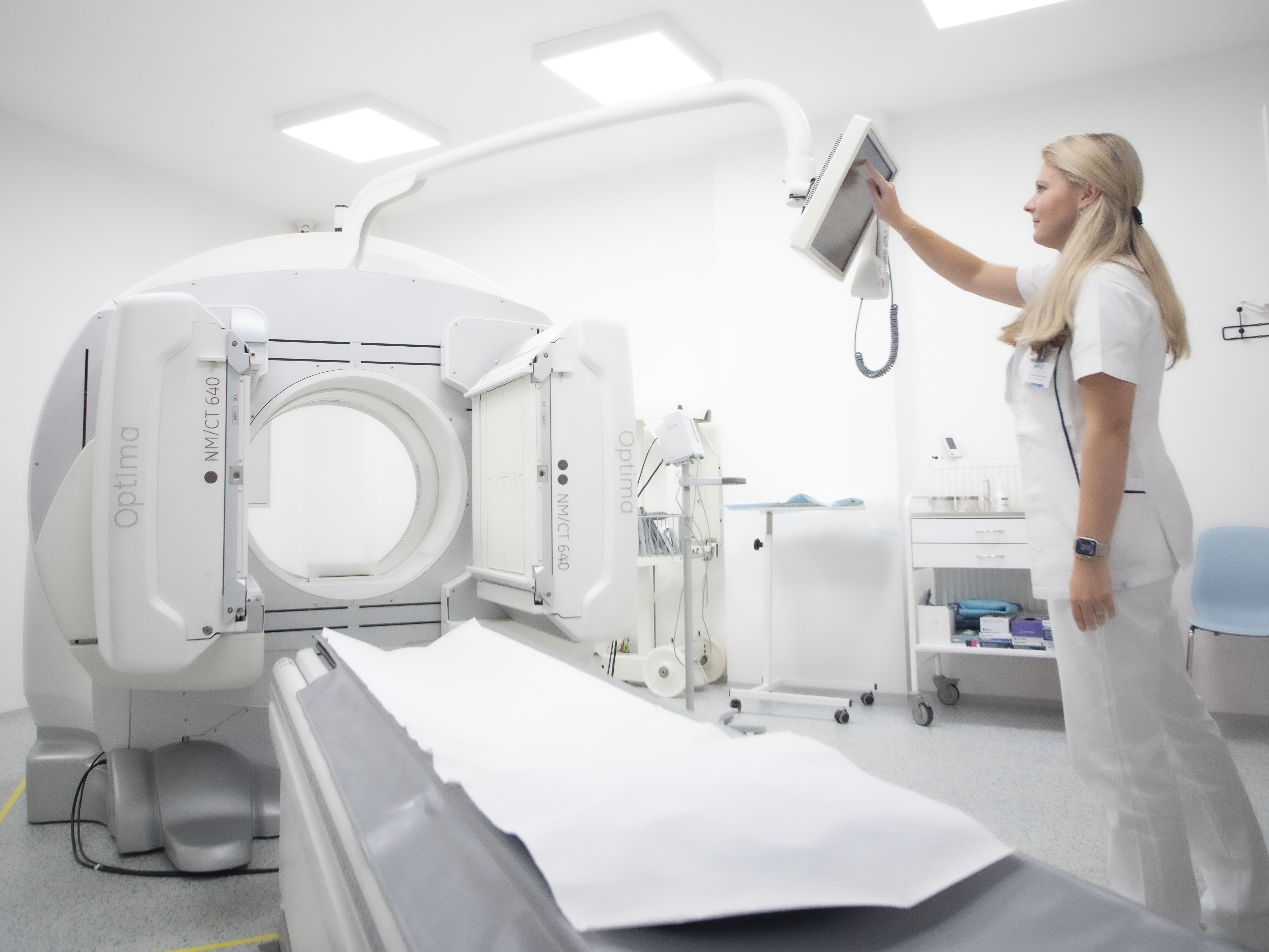
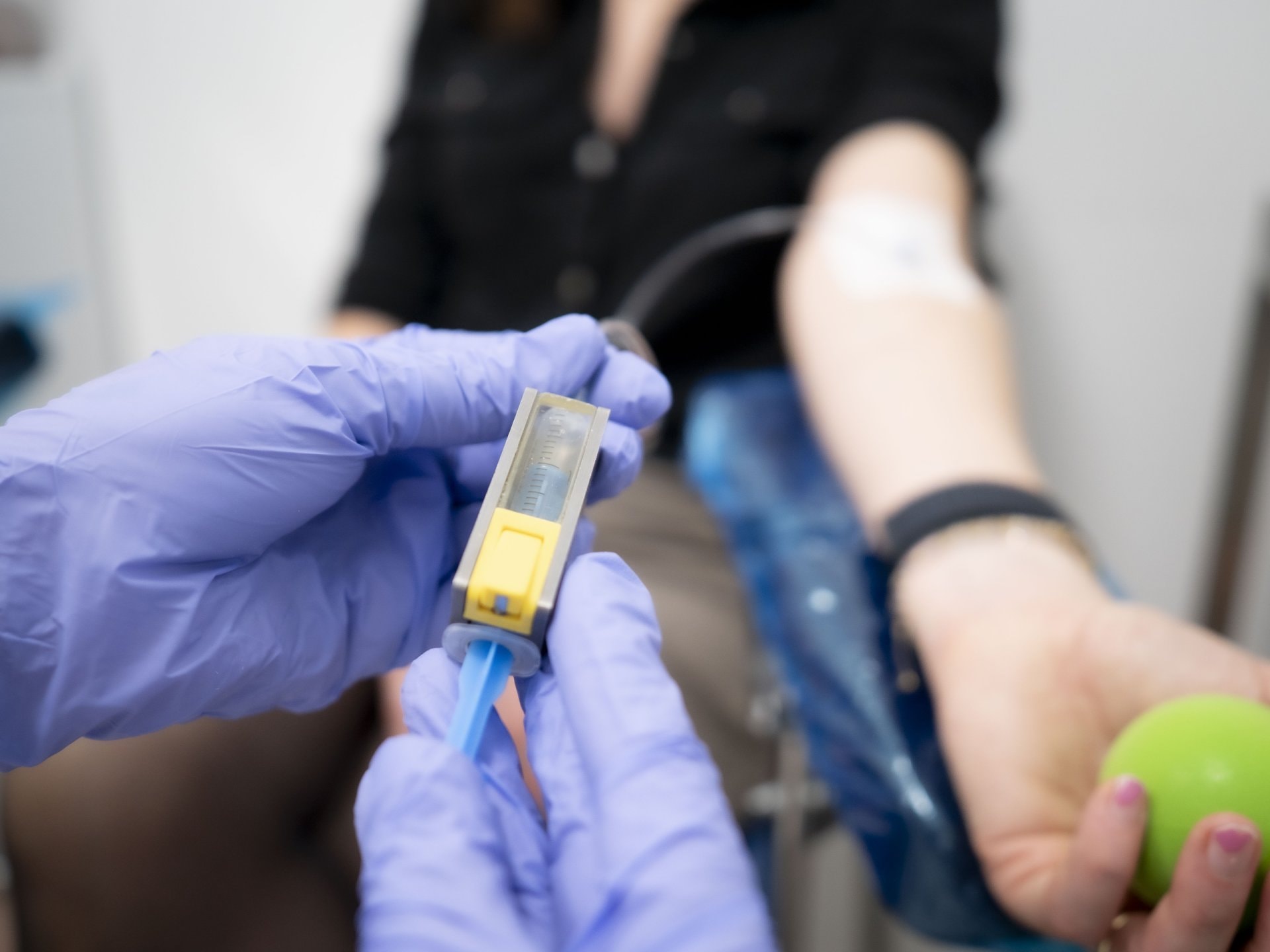
Scintigraphy with 123I-mIBG (metaiodobenzylguanidine) is a specific radionuclide examination aimed at detecting tumours originating in chromaffin tissue and neuroblasts. mIBG is an analogue of noradrenaline, which is actively taken up by cells with catecholamine activity via the noradrenaline transporter.
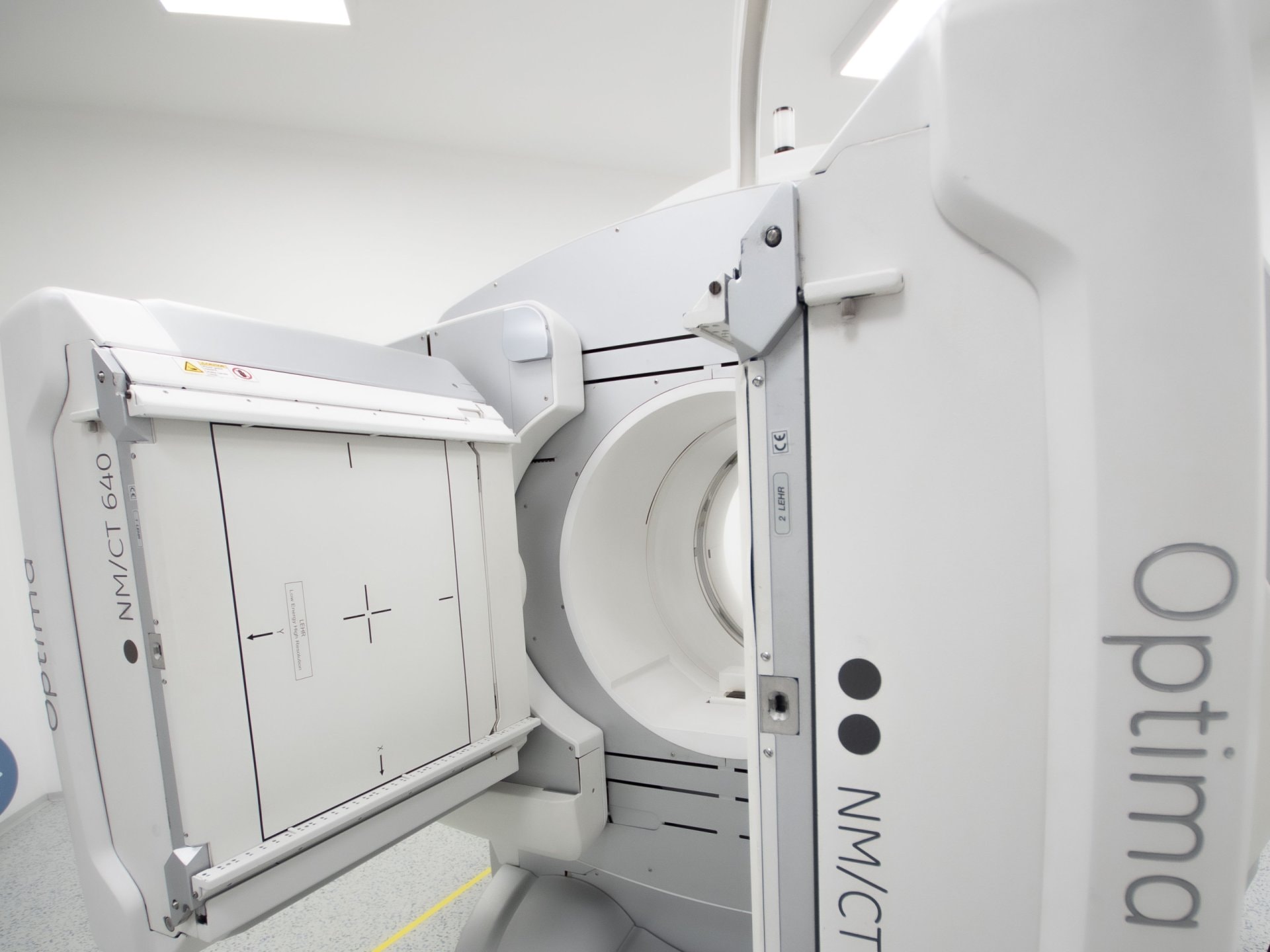
The examination is performed using whole-body planar scintigraphy, supplemented in indicated cases by SPECT/CT, which increases specificity and localisation accuracy.
Main clinical indications
- Pheochromocytoma and paraganglioma – detection of primary tumours and metastases
- Carcinoid and other differentiated neuroendocrine tumours – supplement to other methods
- Assessment of suitability for 131I-mIBG therapy – prediction of accumulation and treatment effect
Interpretation
- Positive finding: foci of pathological accumulation in the adrenal glands, retroperitoneum, mediastinum, bones or elsewhere
Practical information for the referring physician
- Patient preparation:
- thyroid blockade with potassium iodide or Lugol's solution (prevention of 123I uptake in the thyroid gland)
- Certain medications (labetalol, tricyclic antidepressants, sympathomimetics) that interfere with mIBG uptake must be discontinued
- Duration of examination: imaging usually 4 and 24 hours after administration (sometimes 48 hours), takes about 1 hour
- Radiation exposure: approx. 4–6 mSv
- Contraindications: pregnancy, breastfeeding (relative)
Summary for practice:
Scintigraphy with 123I-mIBG is:
- an important method in the diagnosis of pheochromocytomas, paragangliomas and neuroblastomas,
- a valuable tool for staging, treatment monitoring and patient selection for 131I-mIBG therapy,
- a method with high specificity, although it is gradually being supplemented by more modern PET techniques.
