
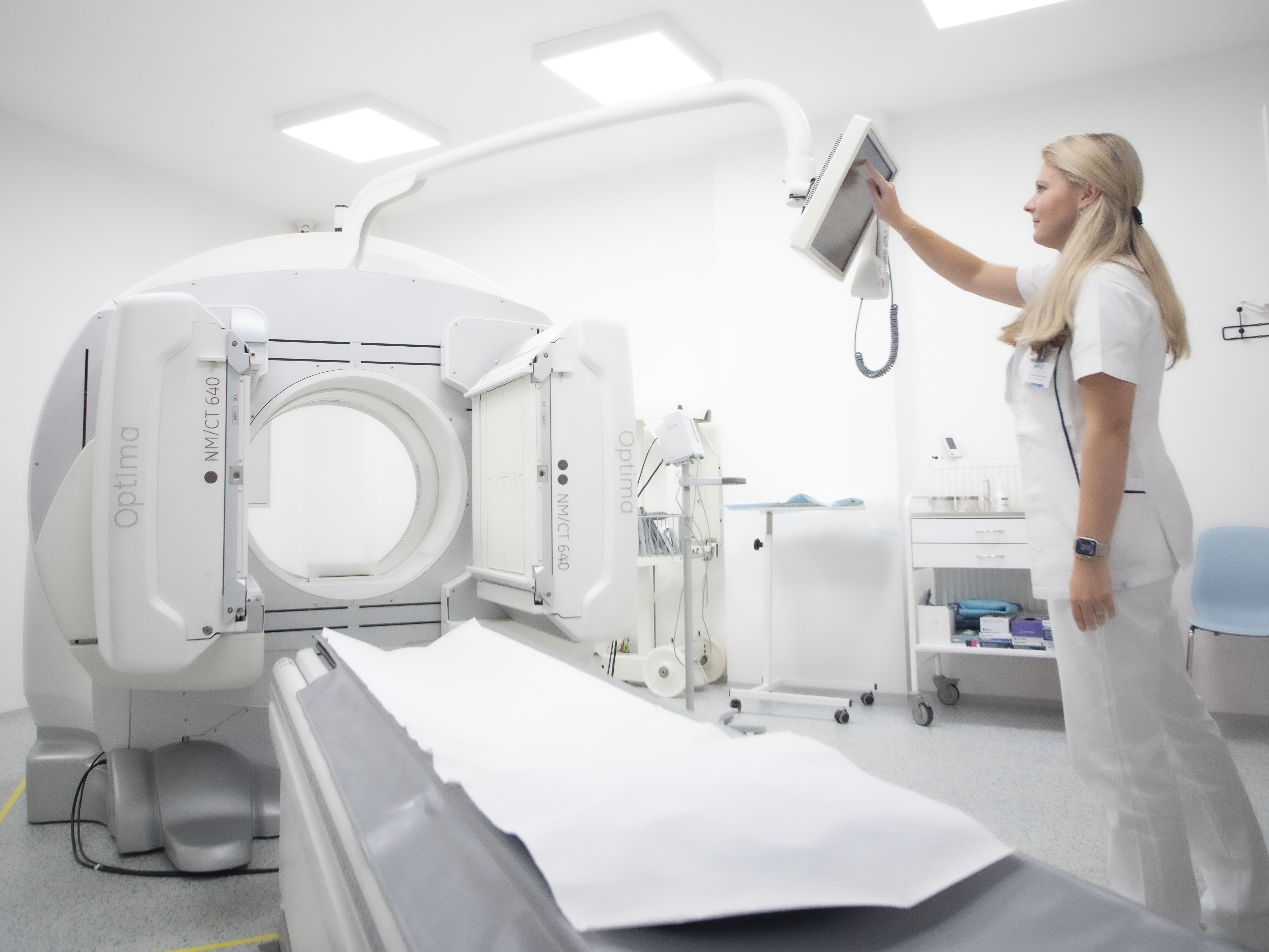
Radionuclide phlebography
Gentle examination of the veins in the lower limbs and pelvis
What is radionuclide phlebography?
Radionuclide phlebography is an examination that allows doctors to monitor how blood flows through the veins in the legs and pelvis.
A small dose of a special radioactive substance is administered into a vein in the leg, and a camera then shows whether the flow through the veins is free and even.
The advantage is that the method is gentle, functional and safe, with a low dose of radiation.
Why is the examination performed?
- When deep vein thrombosis (DVT) is suspected.
- To distinguish between acute and chronic thrombosis.
- To determine whether the body has created alternative vascular pathways (collaterals).
- To check after procedures (stents, thrombolysis, bypass).
- In cases of chronic leg swelling (to determine whether the problem is venous or lymphatic).
How is the examination performed?
- A small amount of radiopharmaceutical is injected into a vein in the instep or leg.
- A special camera monitors how the substance travels through the veins towards the pelvis and heart.
- The examination takes about 20-30 minutes.
It is a painless examination during which you just lie still.
How should I prepare?
- No special diet or fasting is necessary.
- It is recommended that you arrive slightly hydrated (drink some fluids).
- If you are pregnant or breastfeeding, you must inform your doctor in advance.
Is the examination safe?
Yes. The radiation exposure is low and allergic reactions to the administered substance are very rare.
The method is gentler than conventional X-ray phlebography because it does not use iodine contrast agents.
Why choose us?
- Gentle and safe examination of the venous system
- Ability to detect even hidden problems
- Modern equipment and an experienced team
- We cooperate with all health insurance companies
